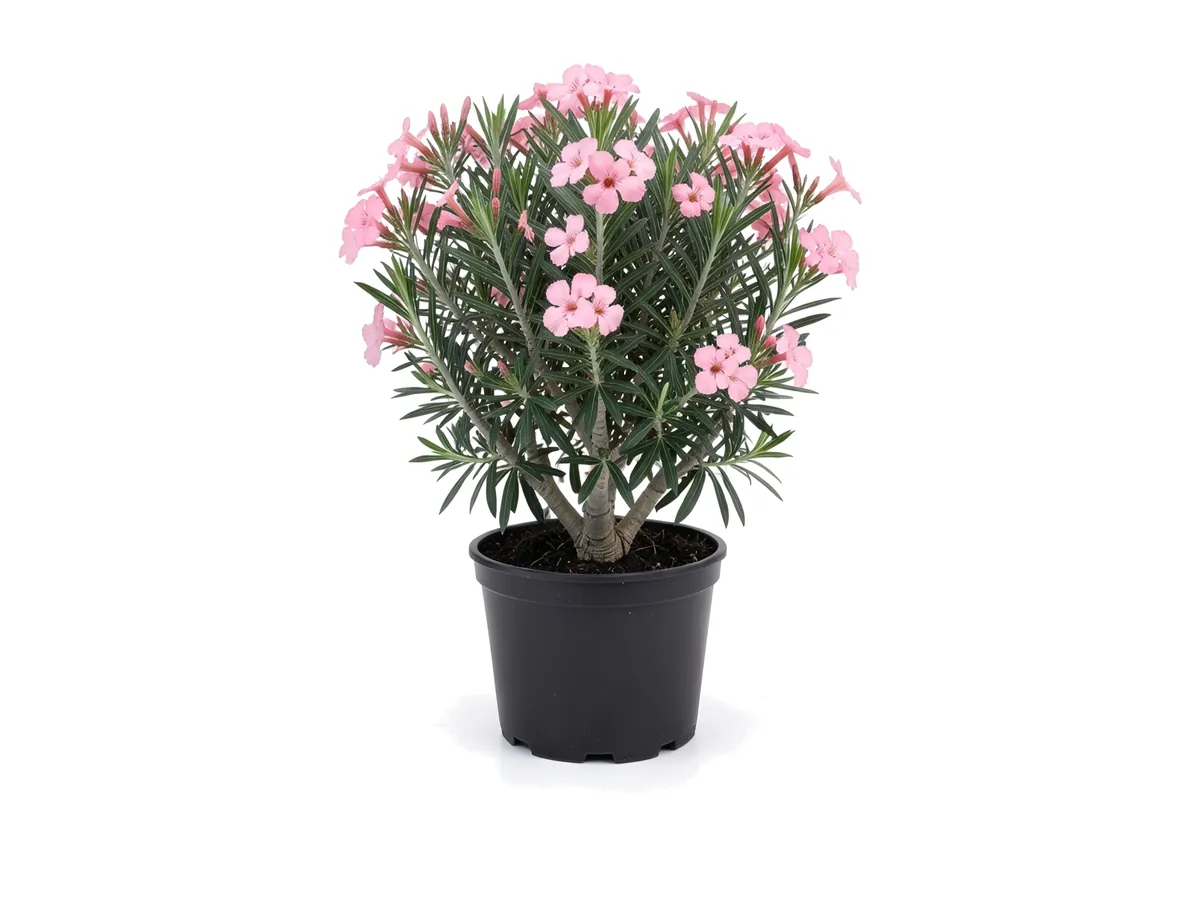
Oleander is one of the toughest and most colorful flowering hedges in SW Florida, its vivid blooms in pink, red, white, or yellow brighten Cape Coral landscapes for months, and it thrives precisely in the hot, salty, drought-stressed conditions that most plants find challenging.
Oleander (Nerium oleander) has been a cornerstone of Florida landscaping for generations. Its heat tolerance, salt tolerance, and drought resistance make it one of the most practical flowering hedges available in SW Florida, particularly for waterfront properties and highway buffers. Blooming from spring through fall with clusters of showy flowers in multiple color varieties, Oleander delivers months of continuous color with minimal maintenance.
In Cape Coral, Oleander is widely planted as a flowering screen along property lines, canal banks, and street frontages. Left unpruned, it develops into a large, multi-stemmed shrub 8 to 12 feet tall. With regular trimming it can be maintained as a formal hedge at any desired height. Double-flowered varieties add extra ornamental interest, with full, layered blooms similar to small roses.
Important safety note: all parts of Oleander are toxic if ingested and the sap can irritate skin. It should not be planted where children or pets might regularly be in contact with it, and branches should not be burned as the smoke is also toxic. As an ornamental landscape plant used by informed adults, it has been a landscape staple for generations, but awareness of its toxic nature is essential.
Growing Conditions for Oleander in SW Florida
- ✓Sun: Full sun, Oleander blooms best with 6 or more hours of direct sun daily; shade reduces flower production significantly
- ✓Water: Drought-tolerant once established; water twice weekly while establishing; tolerates periodic dry spells with no irrigation
- ✓Soil: Extremely adaptable, sandy, clay, alkaline, or poor soils; Cape Coral's conditions are ideal
- ✓Fertilizer: Apply a balanced slow-release fertilizer (10-10-10) twice yearly in spring and summer for best bloom production
- ✓Mature size: 8 to 12 feet tall unpruned; easily maintained at 4 to 8 feet as a hedge
- ✓USDA Zone: 8b to 11, hardy throughout all of SW Florida; can handle brief light frosts
Planting Tips for Cape Coral & Lee County
Oleander is one of the most unfussy plants to establish in Cape Coral. It asks for sun, minimal water, and essentially no soil preparation. Its tolerance for the region's alkaline, nutrient-poor sandy soils makes it an excellent choice for situations where other flowering hedges would struggle, including road-front applications where salt from road runoff is a factor.
- ✓Plant in full sun, Oleander in partial shade produces far fewer blooms and becomes open and leggy
- ✓No soil amendment required; plant directly into native sandy soil with standard irrigation for establishment
- ✓Space 4 to 5 feet on center for a natural-form flowering screen; 3 feet for a formal, trimmed hedge
- ✓Wear gloves when pruning; the milky sap can cause skin irritation on sensitive skin
- ✓Prune lightly after each bloom flush to encourage repeat blooming on the new growth that follows
💡 Pro Tip: Oleander thrives on neglect in SW Florida. If you have a difficult area, a hot strip along a driveway, a road-facing berm, or a canal bank that bakes in full sun, Oleander is one of the few flowering shrubs that will flourish in conditions that would kill most ornamentals. Its toughness is a genuine advantage in the harshest spots in any Cape Coral yard.
Common Problems & Solutions
- ✓Oleander caterpillar (orange and black caterpillar), the most common problem; handpick or treat with Bt spray; damage is cosmetic and recovery is fast
- ✓Oleander leaf scorch (bacterial), yellowing, browning, and decline with no simple cure; remove severely affected plants to prevent spread
- ✓Scale insects, treat with horticultural oil or systemic insecticide in cooler months
- ✓Sparse blooming, move to a sunnier location or fertilize more consistently during the growing season
Where to Use Oleander in Your Landscape
- ✓Road-front or highway-facing border where heat, drought, and salt tolerance are the primary requirements
- ✓Canal bank flowering screen for long-season color and a salt-wind buffer for interior plantings
- ✓Property line hedge in a full-sun exposure where other flowering hedges have failed
- ✓Mass planting on berms and elevated areas where drainage is fast and irrigation is limited
Florida Palm and Plant Co. carries Oleander in pink, red, white, and yellow varieties in 3 and 7-gallon sizes. Call (239) 799-5594 or get a free quote online, our team can recommend the right color and spacing for your Cape Coral landscape project.