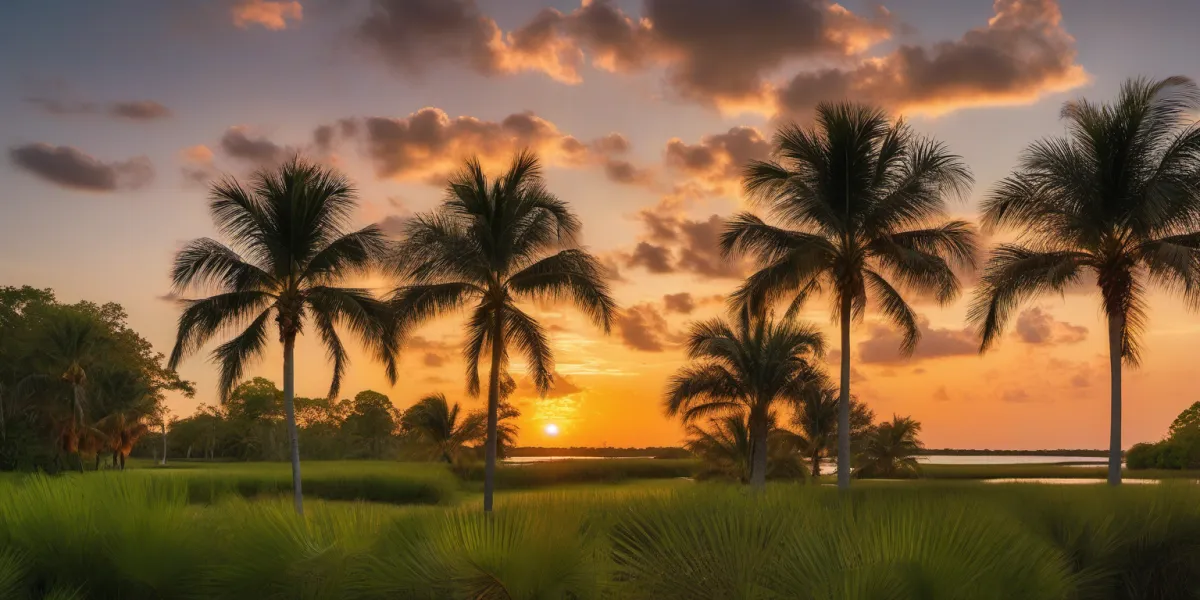
Palm trees are one of the most iconic features of Cape Coral, Fort Myers, and SW Florida landscapes, but they are also some of the most commonly under-fed plants in the region. Florida's sandy, porous soil is notoriously low in nutrients, and without a consistent fertilizer program, even healthy-looking palms can develop serious deficiencies that weaken them over years before the problem becomes obvious. Here's exactly what your palms need, when to feed them, and how to do it right.
Why Florida's Soil Is the Problem
The same thing that makes Lee County and Charlotte County soil drain so well, its high sand content, also causes nutrients to leach out quickly. Every time it rains (and in SW Florida's rainy season, that's nearly every afternoon from June through September), water-soluble nutrients wash down through the root zone before palms can fully absorb them. This is a completely different growing environment than the clay or loam soils found in most of the country. What works for fertilizing trees in the Midwest or Northeast simply doesn't apply here. Florida's sandy soils are also naturally low in magnesium and manganese, two nutrients that palms need in significant quantities. Without deliberate supplementation, deficiency is almost inevitable over time.
The 3-Times-Per-Year Fertilizer Schedule
The University of Florida Institute of Food and Agricultural Sciences (UF/IFAS), the gold standard for Florida horticulture recommendations, recommends fertilizing palms three times per year in Florida's climate. The ideal timing windows are:
- ✓Late February to early March, just before the spring growth flush begins
- ✓June, at the start of the rainy season, when palms are actively growing
- ✓October, after the rainy season slows down, to build nutrient reserves heading into winter
Skipping the October application is one of the most common mistakes homeowners make. It's tempting to think palms don't need feeding as growth slows in fall and winter, but potassium and other nutrients stored during fall protect palms through the cooler months and set up strong spring growth. Do not skip it.
What Nutrients Do Palms Actually Need?
Palm nutrition is more complex than most plants. In addition to the standard nitrogen (N), phosphorus (P), and potassium (K), palms in SW Florida have specific needs for four additional nutrients that are almost universally deficient in our soils:
- ✓Nitrogen (N), drives overall growth and keeps fronds a healthy dark green; palms need a moderate, steady supply rather than large single doses
- ✓Potassium (K), the most critical nutrient for palm health in Florida; deficiency causes yellow-orange tips on older fronds and eventually leads to frond collapse
- ✓Magnesium (Mg), deficiency causes a distinctive yellow banding pattern along the middle of older fronds while the tips stay green (the "yellow stripe" look)
- ✓Manganese (Mn), deficiency is called frizzle top; new growth emerges streaked, stunted, and frizzled rather than opening cleanly, this is most common in newly planted palms
- ✓Iron (Fe), deficiency causes new fronds to emerge pale yellow or almost white; common when soil pH is too high
- ✓Sulfur (S), helps with overall color and supports other nutrient uptake
What Fertilizer to Buy
Look for a fertilizer labeled specifically as a "palm special" or "palm fertilizer" with an analysis of approximately 8-2-12 or 8-0-12, with added magnesium and micronutrients including manganese, iron, and sulfur. The UF/IFAS recommended formulation is an 8-2-12-4Mg blend with micronutrients. Most locally-sold palm fertilizers in Cape Coral and Fort Myers are formulated to this specification, check the label carefully. All nutrients should be in slow-release or controlled-release form, especially nitrogen and potassium. Fast-release fertilizers can temporarily boost growth but increase the risk of salt burn and nutrient flush-out in our heavy rains. Avoid using general lawn fertilizers on palms, they're typically too high in nitrogen, too low in potassium, and contain none of the micronutrients palms specifically need.
How to Apply Palm Fertilizer
Broadcast granular fertilizer evenly across the entire root zone, which for a mature palm extends to roughly the width of the canopy and slightly beyond. Do not pile fertilizer directly against the trunk. Lightly water it in after application if rain isn't expected within 24 hours. For young palms in their first year, use half the normal application rate to avoid root burn. Follow the package directions for application rate by palm size or spread. Never fertilize a palm that is severely stressed, freshly transplanted (wait at least 2 months), or showing active signs of disease, feeding a stressed palm can accelerate decline in some situations.
Never top-dress a struggling palm with extra nitrogen hoping to "green it up fast." Potassium deficiency and nitrogen deficiency look similar (yellowing fronds) but are treated very differently. Excess nitrogen on a potassium-deficient palm makes the problem worse. When in doubt, have a professional assess your palm before applying anything.
Identifying Deficiency Symptoms
- ✓Yellow-orange tips on older (lower) fronds: potassium deficiency, the most common palm problem in SW Florida
- ✓Yellow stripe or band in the middle of older fronds with green tips: magnesium deficiency
- ✓New fronds emerge frizzled, stunted, or streaked: manganese deficiency (frizzle top)
- ✓New fronds emerge pale yellow or whitish: iron deficiency, often related to high soil pH
- ✓Overall light green or pale canopy: nitrogen deficiency, though check potassium and magnesium first
- ✓Brown, dead lower fronds with black spotting: this may be a disease issue, not a nutrition issue, consult a professional
What NOT to Do
- ✓Do not use lawn fertilizer on palms, the wrong nutrient ratios will create or worsen deficiencies
- ✓Do not fertilize within 2 months of transplanting a new palm
- ✓Do not apply extra fertilizer in an attempt to "fix" a sick palm quickly, more is not better
- ✓Do not apply fertilizer to dry soil during a drought without watering it in, granules sitting on dry soil can burn surface roots
- ✓Do not skip the fall application, it's one of the most important feeds of the year
A consistent fertilizer program is the single most effective thing you can do to keep your palms healthy and thriving in SW Florida's challenging soil conditions. Florida Palm and Plant Co. can help you establish the right fertilizer schedule for your specific palms and property. Whether you're maintaining a single Queen Palm in a Fort Myers backyard or caring for a multi-species landscape in Cape Coral, our team knows what works. Call us at (239) 799-5594 or visit palmandplantco.com to request a free quote.